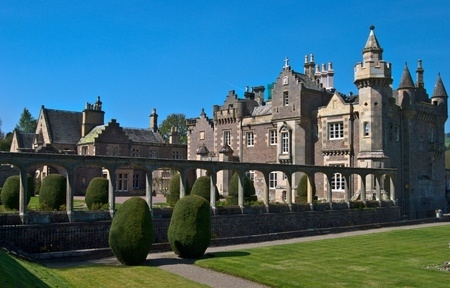
The Home of Sir Walter Scott has re-opened following a winter break and is now open daily from 10.00 am to 5.00 pm. Abbotsford was built in 3 phases. The first from 1817 to 1819, then from 1822 to 1825 and the final stage in the 1850s, twenty years after his death. Sir Walter Scott bought his own ‘mountain farm’ as he described it on a ‘bare haugh and bleak bank by the side of the Tweed’ in 1811. It was then called Newarthaugh on the deeds, but was Cartleyhole to local people. He immediately renamed it Abbotsford, after the ford across the Tweed below the house used in former times by the monks of Melrose Abbey.
Sir Walter Scott was born in 1771 and he created and popularised historical novels in a series called Waverley Novels. He arranged the plots and characters so that readers entered into the lives of both great and ordinary people caught up in violent, dramatic changes in history. Scott believed every human was basically decent regardless of class, religion, politics or ancestry and tolerance is a major theme in his works.
Ivanhoe (1819) is about war between Normans and Saxons;The Talisman (1825) is about conflict between Christians and Muslims. His novels about Scottish history deal with clashes between the new English culture and the old Scottish. Other great novels include Old Mortality, The Head of Midlothian and St. Ronan’s Well. The Waverley series includes Rob Roy (1817), A Legend of Montrose (1819) and Quentin Dunward (1823).
Scott had a reputation for being amiable, generous and modest which made him popular with his contemporaries. He was also famous for entertaining on a grand scale at his Scottish Estate – Abbotsford.
For more information about visiting Abbotsford click here