
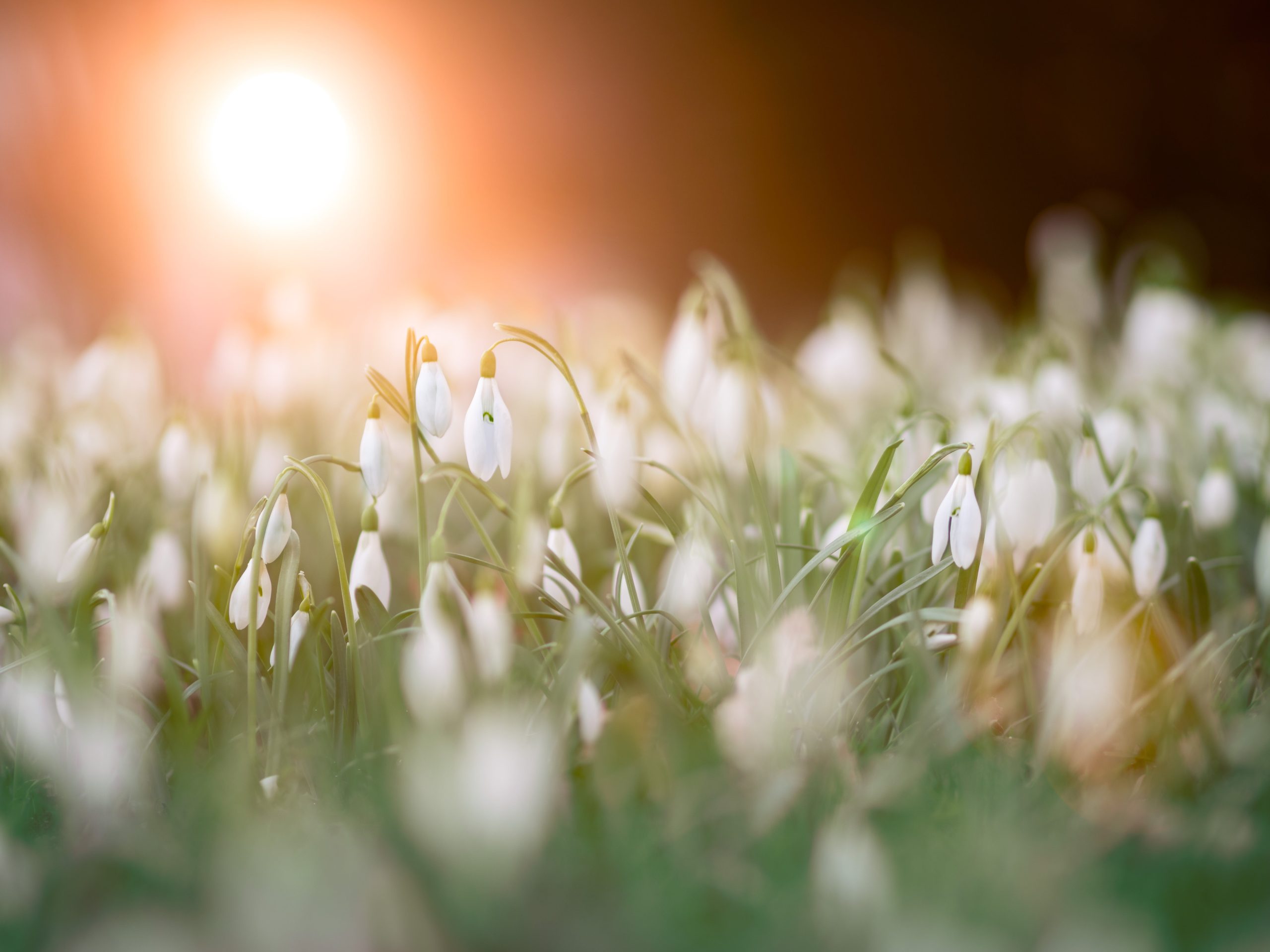
There’s something quietly magical about snowdrops. Appearing when winter still has a firm grip on the land, their small white heads push through frozen ground as if on instinct alone. At Airhouses, when the first snowdrops emerge, it feels like a promise — that lighter days are on their way.
But where do these delicate flowers come from, and how did they become such a beloved part of the British landscape?
The Origins of Snowdrops
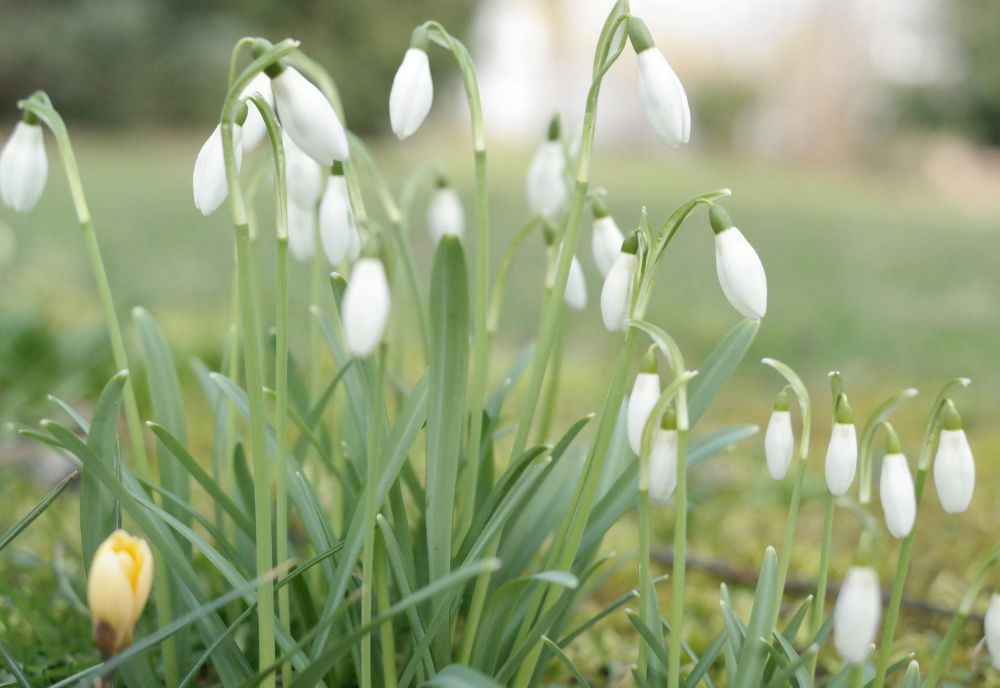
Snowdrops belong to the genus Galanthus, a name derived from the Greek words gala (milk) and anthos (flower), a nod to their pure white petals. Despite feeling quintessentially British, snowdrops are not native to the UK.
Their natural home lies further east, across parts of mainland Europe and western Asia. Wild snowdrops originally grew in woodland and mountainous regions stretching from Spain and France through Italy, the Balkans, and into Turkey and the Caucasus. They evolved to thrive in cold winters, flowering early before trees came into leaf — a trait that would later help them flourish in Britain’s climate.
How Snowdrops Arrived in the UK
Snowdrops are thought to have arrived in Britain sometime between the late medieval period and the early 16th century. The most widely accepted theory is that they were introduced by monks.
Monastic communities often kept physic gardens, growing plants for medicinal and practical use as well as beauty. Snowdrops were believed to have healing properties, particularly for headaches, and were commonly planted near monasteries, churches, and graveyards. Even today, large drifts of snowdrops around old religious sites hint at this early connection.
By the 18th century, snowdrops had begun to spread beyond cloisters and churchyards into the gardens of large estates, where their understated elegance made them quietly fashionable.
From Garden Flower to British Icon
During the Victorian era, snowdrops truly found their place in British culture. While the period is often associated with bold, showy flowers, there was also a deep appreciation for plants that symbolised emotion and meaning. Snowdrops came to represent hope, purity, and renewal — fitting for a flower that blooms at the very edge of winter.
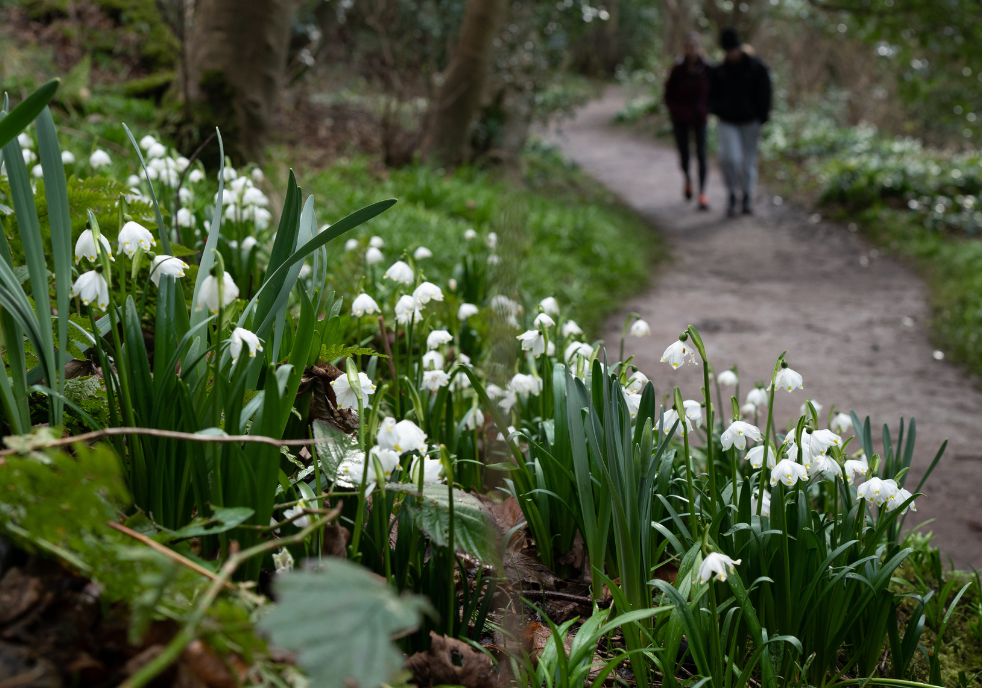
They were frequently planted in naturalistic drifts under trees and along pathways, a style that still feels timeless today. Over time, escaped garden plants became naturalised, spreading gently into woodlands, riverbanks, and hedgerows across the country.
Although they are not native, snowdrops are now considered an integral part of the British winter and early spring landscape.
Galanthomania: Britain’s Love Affair with Snowdrops
Britain’s affection for snowdrops goes deeper than most people realise. In fact, it has its own name: galanthomania.
This passion for collecting and cultivating snowdrops has grown steadily since the 19th century and is still very much alive today. Dedicated gardeners seek out rare varieties with subtle differences — taller stems, wider petals, green markings, or honeyed scents. Some cultivars have become highly prized, with bulbs exchanged between collectors like treasured heirlooms.
Across the UK, snowdrop festivals and open gardens draw visitors each year, celebrating a flower that refuses to shout for attention yet always steals the show.


Snowdrops in the Scottish Landscape
Snowdrops are particularly at home in Scotland, where long winters make their arrival all the more meaningful. In woodland settings and historic estates, they often appear in sweeping carpets, brightening dark ground beneath bare branches.
In rural places like the Scottish Borders, snowdrops feel perfectly placed — natural, unforced, and quietly resilient. They thrive where the land is left to breathe, following the rhythms of the seasons rather than fighting against them.
We have lots of wondeful opportunites in the South of Scotland to see these wonderful snowdrops. Here is a great list of places for this year complied by Scotland Starts Here.
A Quiet Sign of Renewal
Snowdrops don’t bloom for long, and perhaps that’s part of their charm. They remind us to notice small moments, to step outside on a cold morning and look closely at what’s growing beneath our feet.
At Airhouses, they mark a subtle turning point in the year — a gentle shift from stillness to movement, from rest to renewal. Long before spring fully arrives, snowdrops are already here, doing what they’ve done for centuries: offering hope, quietly and without fuss.