
Local History
Stone Age Axe and Flint Heads were discovered on the farm early in the last Century. These can now be seen at the National Museum of Scotland. There is a link to the items which were found here on our web site. We have a new walk which takes you into the ancient Airhouse Wood, on the edge of the Southern Upland Way, and it is along here that these artefacts were found. We discovered a number of interesting hollows at the top of the hill, one of which we believe is an ancient quarry, and there is also perhaps signs of the remains of stone age dwellings. It was fascinating to stand on the hillside looking toward the Roman Road of Deere Street and thinking about people who were there 3,000 years ago seeing the same hills, although probably more densely forested.
For more information on the Roman Road, Deere Street, have a look here
There is a link here to a map of airhouse and the area where the flint heads were found.
There is also evidence of an old fort on Airhouse – here
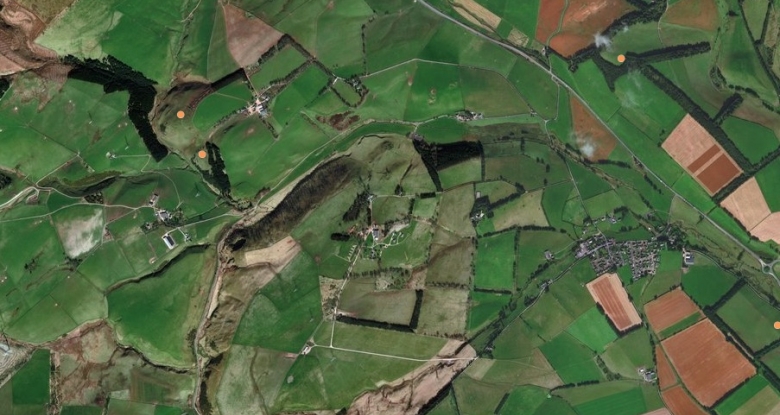
Sites of Old Forts around Airhouse – shown by the little orange dots
Using the fort database made by Edinburgh and Oxford Universities, we also located a number of other better preserved hill forts in the area. The fort next to Kirkton Hill farm is located directly opposite where we think the axe heads were found. There are a number of other forts locally and the one next to Carfrae Fam is easily accessible from the road and worth the bit of a walk.
Channelkirk Church
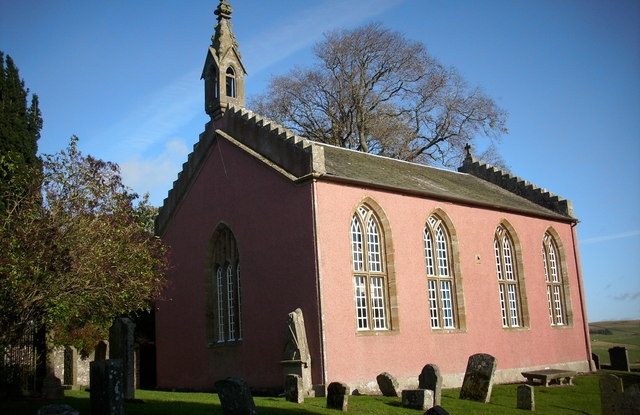
Channelkirk Church, Oxton – James Denham , via Wikimedia Commons
There are lots of interesting connections with St. Cuthbert and Christianity in the local area. There is an interesting article here about the Oxton Village church. Again, a great walk from your lodge and some lovely views.
St. Cuthbert, a shepherd boy, was born in Channelkirk in 635AD and went on to become the Bishop of Lindesfarne. There is a stone to mark the significance between the young St. Cuthbert and Channelkirk. This can be found near to the Holy Water Cleuch which could have been used by St. Cuthbert to baptise his early converts and, since then, in the christening of children born in Channelkirk. It is along the road at the bottom of the Airhouse Back Braes.
There is an annual walk – Walk with St Cuthbert – from Channelkirk Church to Melrose. This year it is on Saturday the 9th June. This start at 9.00 am at the Church and it is 17 miles to Melrose. There are options for a shorter walk to finish at Lauder or Bluecairn. This walk is the opportunity to walk in the first steps of the life journey which the young shepherd boy made way back around 640AD. Tickets can be purchased online hereand the cost includes refreshments during the walk and hot drinks and traybakes at the finish. A walk pack including a map is also provided at the start at Channelkirk Church.
Airhouse
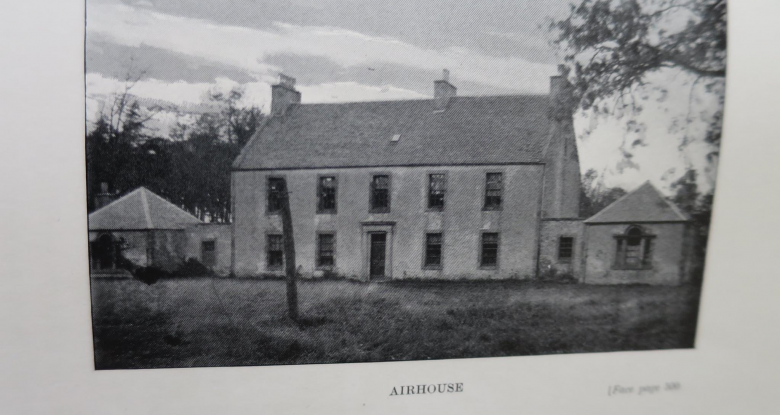
The original Airhouse Farmhousefrom The History of Channelkirk
The current farmhouse is in the walled garden of the original farmhouse which had not been lived in since1947. It tumbled away until it was eventually demolished. However, one of the distinctive side windows is in the current house and there are the remains of what was probably a small Summer House in the garden, with the same distinctive window.
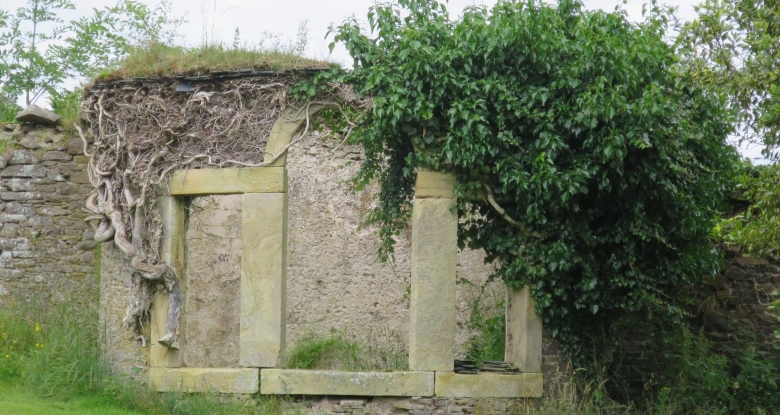
Summer House