
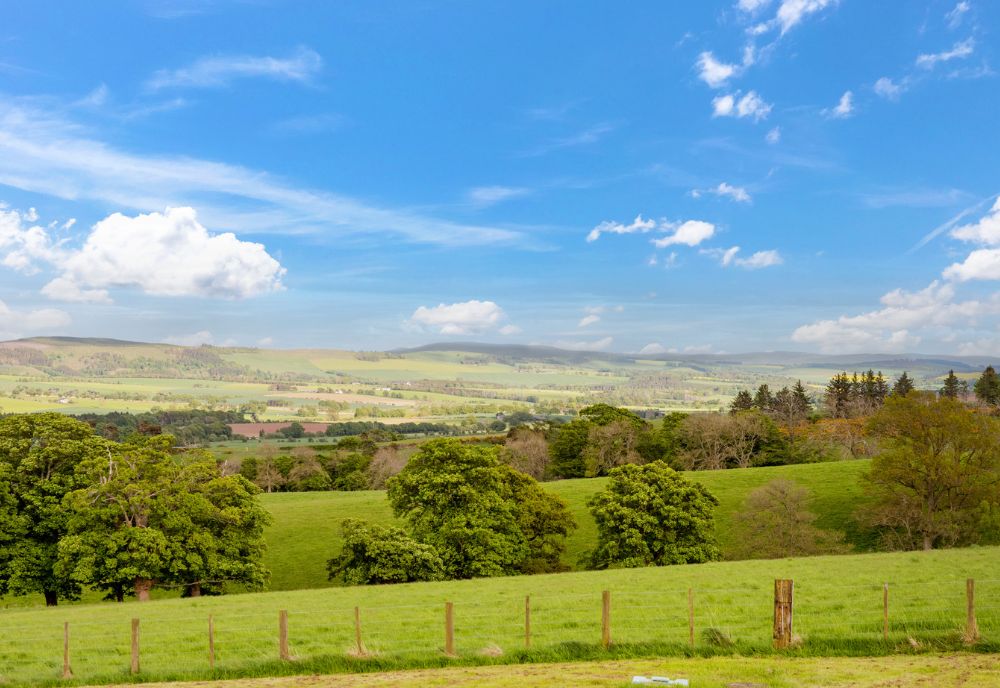
From Airhouses, the Lammermuir Hills form part of the landscape we look out towards every day. Our farm sits in the beautiful Scottish Borders countryside, opposite the hills, with the landscape stretching out between us and the higher ground.
For us, they are simply part of the view and part of what makes this corner of the Borders such a special place to live and to share with our guests but they are also fascinating in their own right, full of history and geological wonder.
A landscape shaped by geology
The Lammermuir Hills form part of the Southern Uplands, stretching between the Scottish Borders and East Lothian, with the North Sea beyond them to the east. The split the land streching to the sea and the fertile Tweed valley heading to England.
Their story goes back hundreds of millions of years. Much of the hills is made from ancient rocks formed from sediments deposited on the floor of the Iapetus Ocean during the Ordovician and Silurian periods. These rocks were later folded and uplifted as the ancient continents moved together, creating the foundations of the Southern Uplands.
The landscape we see today was then shaped by ice during the last Ice Age, helping to form the broad valleys and rounded hills that give the Lammermuirs their distinctive appearance.
So when we look across at the hills from Airhouses, we’re looking at a landscape that has been millions of years in the making. What looks like a peaceful stretch of countryside has a surprisingly dramatic story beneath it.
If you are interested in the Geology you can find our more here: https://webapps.bgs.ac.uk/memoirs/docs/B07006.html. and here https://geoguide.scottishgeologytrust.org/p/gcr06/gcr06_chapter17lothiansandborders
The landscape around the Lammermuir Hills is very much a working landscape, where farming and nature have developed alongside one another over generations.
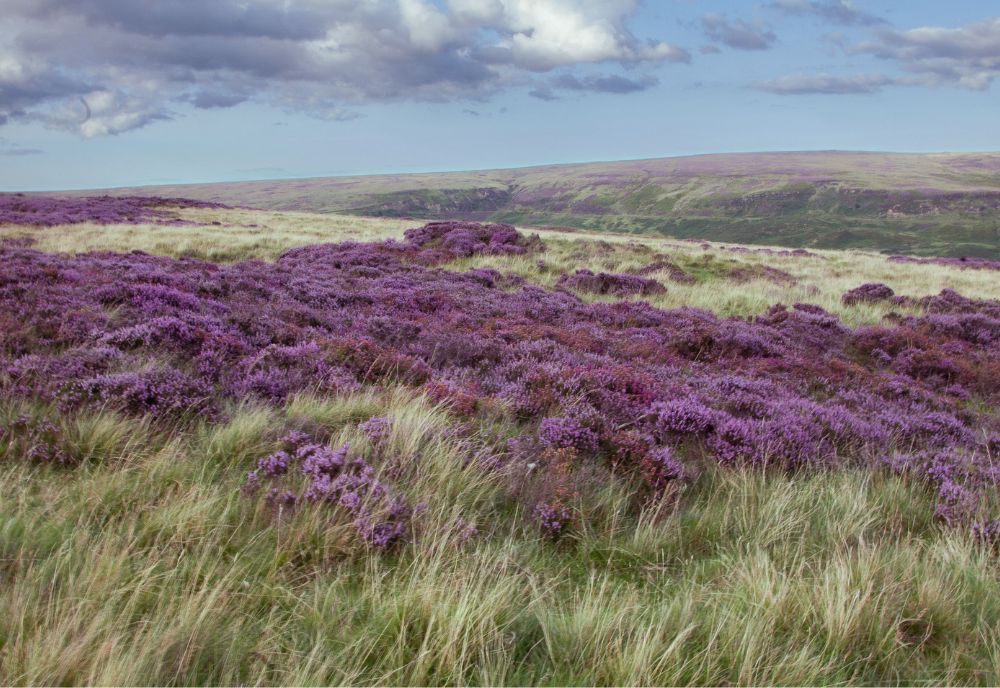
As you climb higher into the hills, the enclosed fields and pasture gradually give way to open moorland. The higher ground has a mixture of heather, rough grasses, cotton grass and other plants adapted to the exposed conditions. In late summer, the heather brings those wonderful shades of purple and pink to the hills, creating one of the most recognisable sights of the Scottish uplands. NatureScot describes Scotland as a European stronghold for upland heath, with heather-rich moorland providing an important habitat for a range of wildlife.
Look up into the open skies above the Lammermuirs and there is always the possibility of seeing birds of prey hunting over the hills. The upland habitats of southern Scotland support species including hen harrier and merlin, while the wider upland landscape provides habitat for birds such as golden plover, curlew, skylark and meadow pipit.
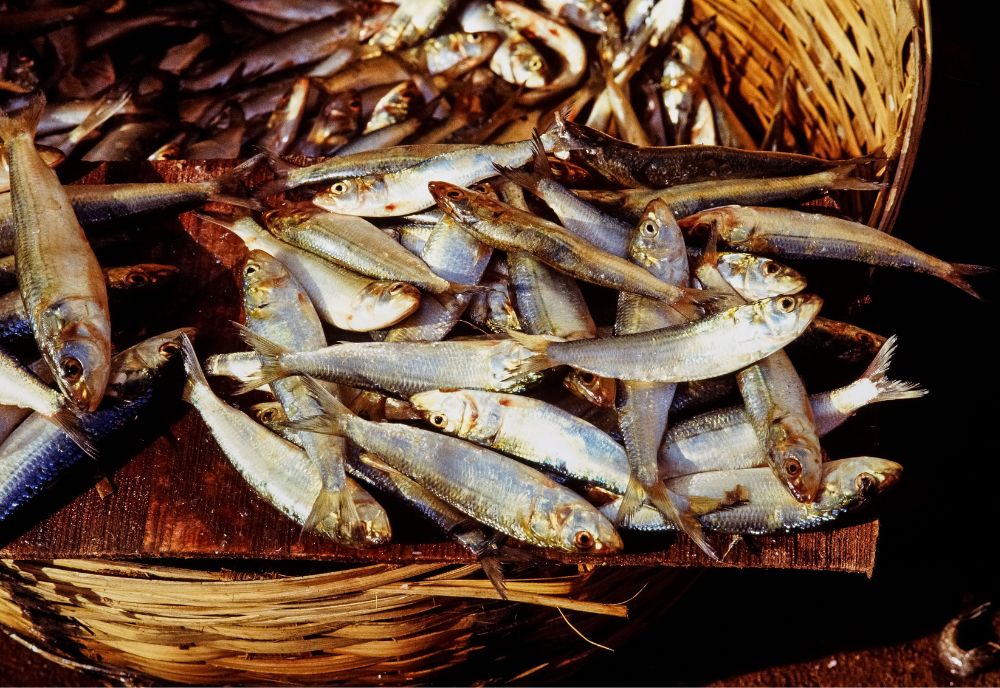
Running across the Lammermuir Hills between Dunbar and Lauder is an old route known as the Herring Road. It was an important trade route, particularly during the 18th and 19th centuries when Dunbar’s herring industry was thriving.
Fishwives travelled inland from Dunbar towards Lauder carrying herring to sell at markets, while people from communities on the other side of the hills made the journey to the coast to buy salted herring to see them through the winter. The route was also used by packhorses, carts and other travellers carrying goods between the coast and the inland communities.
The Herring Road wasn’t necessarily one fixed track. Historical maps show that its route across the Lammermuirs changed over time, probably partly because people chose different lines according to the ground conditions. Today, parts of the historic route can still be followed, including the section that runs between Dunbar and Lauder.
It is fascinating to think that the same hills we look across from Airhouses were once crossed regularly by people making what must have been a demanding journey between the fishing port of Dunbar and the communities of the Scottish Borders.
September is a lovely time to see the Lammermuirs. The days are still long enough to make the most of being outside, but there is a noticeable change in the air as summer begins to give way to autumn. The heather is still giving the hills their colour, while the evenings start to draw in and the landscape takes on a softer, warmer feel.
The weather can completely change the view, too. On a clear morning, the hills can seem surprisingly close, with all their contours visible across the landscape. On a misty day, they can almost disappear into the cloud, while rain moving across the hills creates constantly changing patches of light and shadow. You can sit in your lodge and watch the weather make its way across the landscape without ever needing to go outside..
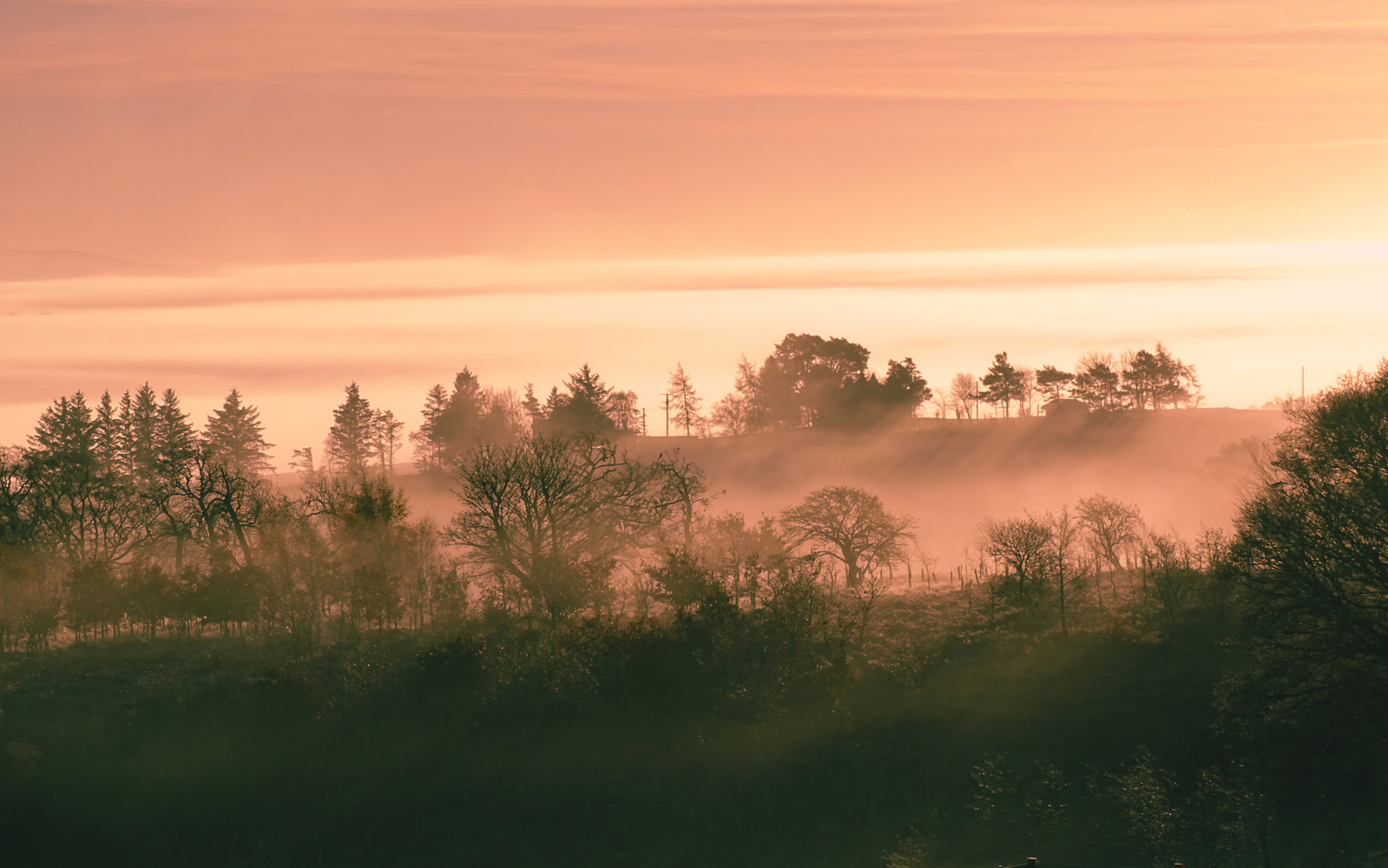
Perhaps that is what we like most about the Lammermuirs. You don’t have to climb them to appreciate them. From Airhouses, they are simply part of the view — changing with the seasons, the light and the weather, and giving every stay a slightly different landscape to look out upon. We love them!